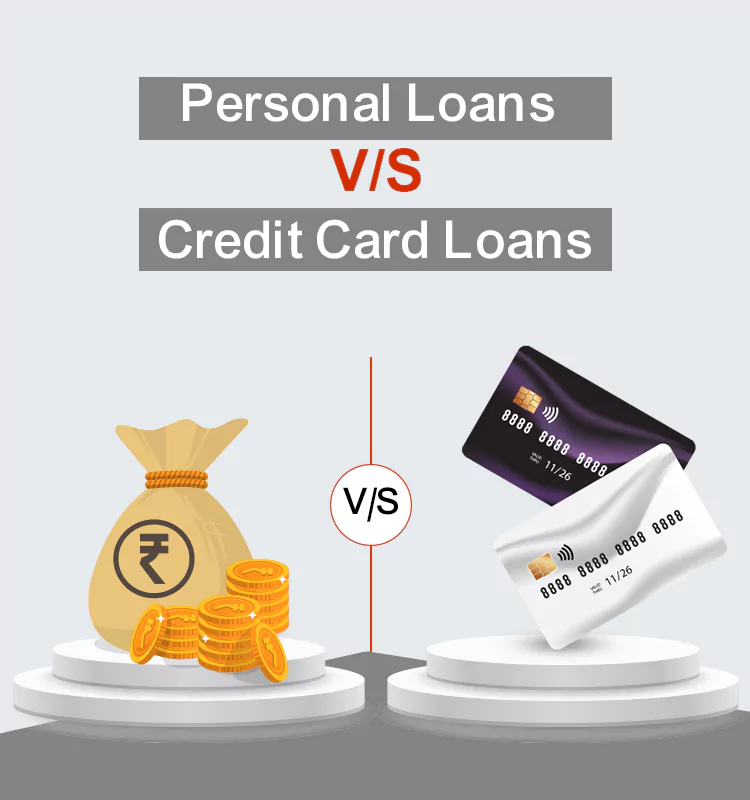
Personal loans and credit cards are both ways to borrow money, but they work differently. Understanding the key differences can help you choose the type of credit that fits your situation.
1. How They Work
A personal loan provides you with a fixed amount of money upfront. You typically repay it through scheduled monthly payments over a set period.
A credit card gives you a revolving line of credit. You can borrow, repay, and borrow again as long as you remain within your credit limit.
2. Interest Rates
Personal loans often have a fixed interest rate, meaning your rate may remain the same throughout the loan term.
Credit card interest rates can vary depending on the card and issuer and may be higher than rates available on some personal loans.
3. Repayment
With a personal loan, you generally make a fixed payment each month until the balance is paid off.
With a credit card, your monthly payment can change depending on your balance and the terms of your account. Paying only the minimum can also extend the time it takes to repay the balance.
4. When Each May Be Used
Personal loans are commonly used for larger, planned expenses such as home improvements, major purchases, or consolidating certain debts.
Credit cards are often used for everyday purchases and short-term spending, particularly when the balance can be paid off regularly.
5. Fees and Costs
Both options can have fees. Personal loans may include origination or late-payment fees, while credit cards may have annual fees, late fees, balance-transfer fees, or other charges depending on the card.
Final Thoughts
Neither option is automatically right for every situation. Before borrowing, compare the interest rate, fees, repayment terms, and total cost. Most importantly, choose an option that fits comfortably within your budget and repayment ability.